
Brazilian Portuguese living room vocabulary is essential for anyone learning Portuguese because home words appear in daily conversations, house tours, rental listings, decoration videos, and family chats. In this guide, you will learn the most useful words for the living room in Brazil, including furniture, decoration, lighting, curtains, and common differences between European Portuguese and Brazilian Portuguese.
Why Learn Living Room Vocabulary in Brazilian Portuguese?
The living room is one of the most common spaces in a home. Therefore, learning these words helps you describe your house, understand conversations, and talk about furniture naturally.
In Brazil, people usually say sala or sala de estar for “living room.” However, in casual conversation, sala is often enough when the context is clear.
For example:
Minha sala é pequena, mas confortável.
My living room is small, but comfortable.
Eu comprei um sofá novo para a sala.
I bought a new sofa for the living room.
Basic Brazilian Portuguese Living Room Vocabulary
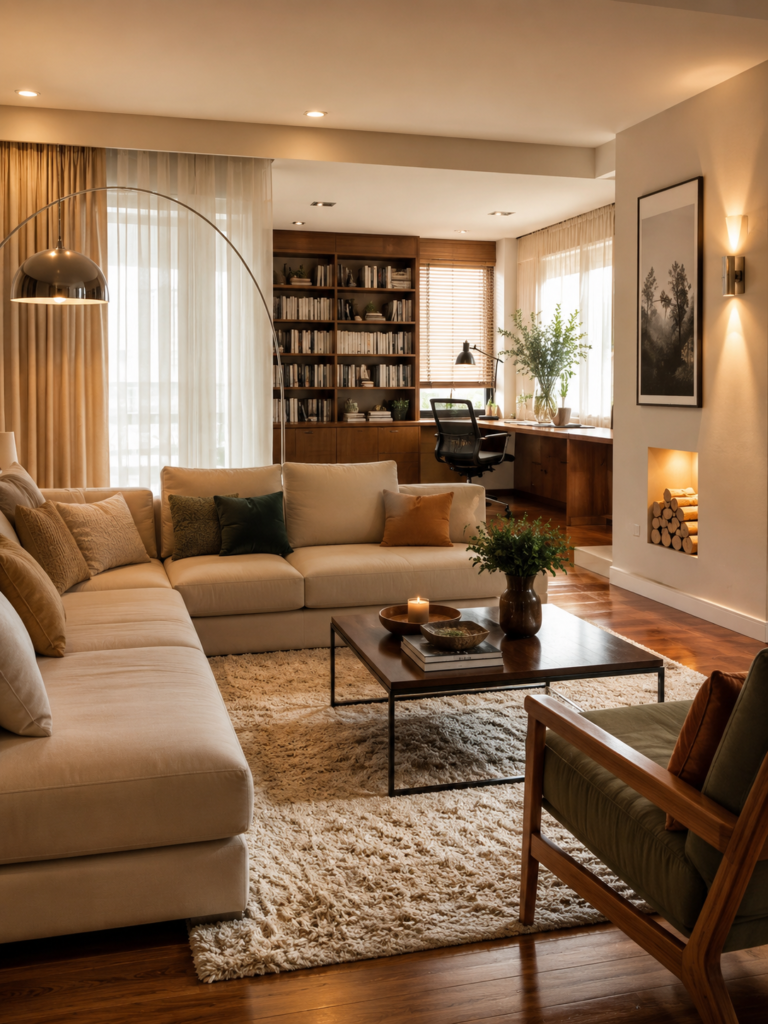
Here are the most important words from the images, adapted to Brazilian Portuguese when necessary.
Sala de estar: Living Room
A sala de estar means “the living room.” In Brazil, this is correct and common, although many people simply say a sala.
Examples:
A sala de estar fica perto da cozinha.
The living room is near the kitchen.
Nós assistimos TV na sala.
We watch TV in the living room.
Furniture Vocabulary in Brazilian Portuguese
Furniture words are very useful because they help you describe what you have at home. Also, they appear often when shopping, renting an apartment, or decorating a house.
O sofá: Sofa
O sofá means “the sofa” or “the couch.” This word is very common in Brazil.
Examples:
O sofá é muito confortável.
The sofa is very comfortable.
Meu sofá fica perto da janela.
My sofa is near the window.
A poltrona: Armchair
A poltrona means “the armchair.” Usually, a poltrona is a single comfortable chair used in a living room, bedroom, or reading area.
Examples:
A poltrona combina com o sofá.
The armchair matches the sofa.
Gosto de ler sentado na poltrona.
I like reading while sitting in the armchair.
O sofá-cama: Sofa Bed
O sofá-cama means “the sofa bed.” This word is useful when talking about small apartments or guest rooms.
Examples:
Temos um sofá-cama na sala.
We have a sofa bed in the living room.
O sofá-cama é prático para visitas.
The sofa bed is practical for guests.
A mesa de centro: Coffee Table
A mesa de centro means “the coffee table.” In Brazil, this expression is common in decoration and furniture stores.
Examples:
A mesa de centro fica na frente do sofá.
The coffee table is in front of the sofa.
Coloquei um livro na mesa de centro.
I put a book on the coffee table.
A estante: Bookshelf
A estante means “the bookshelf” or “shelving unit.” In Brazil, it can refer to a shelf for books, decoration, or TV items.
Examples:
A estante está cheia de livros.
The bookshelf is full of books.
Minha estante fica no escritório.
My bookshelf is in the study.
Decoration Vocabulary in Brazilian Portuguese
Decoration words help you describe details that make a home more personal. Moreover, they are common in interior design content.
A almofada: Pillow or Cushion
A almofada means “the pillow” or “the cushion,” especially on a sofa or chair. For a bed pillow, Brazilians usually say o travesseiro.
Examples:
A almofada azul está no sofá.
The blue cushion is on the sofa.
Comprei almofadas novas para a sala.
I bought new cushions for the living room.
O tapete: Rug
O tapete means “the rug” or “the carpet.” In Brazil, tapete is commonly used for a rug on the floor.
Examples:
O tapete fica embaixo da mesa de centro.
The rug is under the coffee table.
Esse tapete deixa a sala mais bonita.
This rug makes the living room more beautiful.
O quadro: Picture or Painting
O quadro means “the picture,” “the painting,” or “the framed artwork.” Context usually tells you the exact meaning.
Examples:
O quadro está na parede.
The picture is on the wall.
Ela comprou um quadro moderno.
She bought a modern painting.
A moldura: Frame
A moldura means “the frame.” You can use it for a picture frame, mirror frame, or decorative frame.
Examples:
A moldura do quadro é branca.
The picture frame is white.
Essa moldura combina com a parede.
This frame matches the wall.
O vaso: Vase
In European Portuguese, the image uses a jarra for “vase.” However, in Brazilian Portuguese, o vaso is more common when talking about a decorative vase or a flower vase.
Examples:
O vaso está em cima da mesa.
The vase is on the table.
Coloquei flores no vaso.
I put flowers in the vase.
Lighting Vocabulary in Brazilian Portuguese
Lighting words can vary between Brazil and Portugal. Therefore, it is important to learn the Brazilian terms.
A luminária: Lamp
The image uses o candeeiro, which is common in European Portuguese. In Brazil, people usually say a luminária for a lamp or o abajur for a table lamp.
Examples:
A luminária fica ao lado do sofá.
The lamp is beside the sofa.
O abajur está na mesa lateral.
The table lamp is on the side table.
A arandela: Wall Light
The image uses o aplique for “wall light.” In Brazil, a arandela is more common, especially in decoration and architecture.
Examples:
A arandela ilumina a parede.
The wall light illuminates the wall.
Instalamos uma arandela na sala.
We installed a wall light in the living room.
Curtains and Blinds in Brazilian Portuguese
Window vocabulary is useful because Brazil uses several terms for curtains and blinds. In addition, some words from Portugal sound less natural in Brazil.
A cortina: Curtain
A cortina means “the curtain.” This is the standard word in Brazilian Portuguese.
Examples:
A cortina está aberta.
The curtain is open.
Fechei a cortina porque estava muito claro.
I closed the curtain because it was too bright.
A cortina transparente: Sheer Curtain
The image says a cortina for “sheer curtain.” In Brazil, you can say cortina transparente, cortina de voil, or cortina de tecido leve.
Examples:
A cortina transparente deixa a sala clara.
The sheer curtain keeps the living room bright.
Ela escolheu uma cortina de voil para a janela.
She chose a sheer curtain for the window.
A persiana horizontal: Venetian Blind
The image uses o estore laminado, which is more European Portuguese. In Brazil, people usually say a persiana horizontal or a persiana veneziana.
Examples:
A persiana horizontal fica na janela da sala.
The Venetian blind is on the living room window.
Abri a persiana para entrar luz.
I opened the blind to let light in.
A persiana rolô: Roller Blind
The image uses o estore de rolo. In Brazilian Portuguese, a persiana rolô or a cortina rolô sounds more natural.
Examples:
A persiana rolô é prática e moderna.
The roller blind is practical and modern.
A cortina rolô combina com a decoração.
The roller blind matches the decoration.
Parts of the Room in Brazilian Portuguese
These words help you describe the structure of a living room. Also, they are useful when talking about renovation, cleaning, or decoration.
O teto: Ceiling
O teto means “the ceiling.”
Examples:
O teto da sala é alto.
The living room ceiling is high.
A luminária fica no teto.
The light fixture is on the ceiling.
O piso or O chão: Floor
The image uses o soalho, which is more common in Portugal. In Brazil, people usually say o piso or o chão.
Examples:
O piso da sala é claro.
The living room floor is light-colored.
O tapete está no chão.
The rug is on the floor.
A lareira: Fireplace
A lareira means “the fireplace.” This word is correct in Brazil, although fireplaces are less common in many Brazilian regions because of the warm climate.
Examples:
A lareira fica no canto da sala.
The fireplace is in the corner of the living room.
No inverno, usamos a lareira.
In winter, we use the fireplace.
A moldura do teto or A sanca: Ceiling Molding
The image uses o friso for “molding.” In Brazil, depending on the design, people may say a moldura do teto, a sanca, or o acabamento do teto.
Examples:
A moldura do teto deixou a sala elegante.
The ceiling molding made the living room elegant.
A sanca tem iluminação embutida.
The ceiling molding has built-in lighting.
Study Room Vocabulary in Brazilian Portuguese
The image also shows o escritório, which means “the study,” “the office,” or “the home office.” In Brazil, this word is common for a work or study room at home.
Examples:
Meu escritório fica ao lado da sala.
My office is next to the living room.
Eu estudo no escritório à noite.
I study in the office at night.
European Portuguese vs Brazilian Portuguese: Important Changes
Some words from the images are correct in Portuguese, but they sound more natural in Portugal than in Brazil. For Brazilian Portuguese, use these alternatives:
| European Portuguese | Brazilian Portuguese | English |
|---|---|---|
| o candeeiro | a luminária / o abajur | lamp |
| o aplique | a arandela | wall light |
| o soalho | o piso / o chão | floor |
| o estore laminado | a persiana horizontal / veneziana | Venetian blind |
| o estore de rolo | a persiana rolô / cortina rolô | roller blind |
| o cortinado | a cortina | curtain |
| a jarra | o vaso | vase |
| o friso | a moldura do teto / a sanca | molding |
Complete Vocabulary List: Living Room in Brazilian Portuguese
| Brazilian Portuguese | English |
|---|---|
| a sala de estar | living room |
| a sala | living room |
| o teto | ceiling |
| o piso | floor |
| o chão | floor |
| o sofá | sofa |
| a poltrona | armchair |
| o sofá-cama | sofa bed |
| a mesa de centro | coffee table |
| a almofada | cushion |
| o tapete | rug |
| o quadro | picture / painting |
| a moldura | frame |
| a estante | bookshelf |
| o vaso | vase |
| a luminária | lamp |
| o abajur | table lamp |
| a arandela | wall light |
| a lareira | fireplace |
| a cortina | curtain |
| a cortina transparente | sheer curtain |
| a persiana horizontal | Venetian blind |
| a persiana rolô | roller blind |
| o escritório | study / office |
| a sanca | ceiling molding |
Example Sentences with Brazilian Portuguese Living Room Vocabulary
A sala de estar da minha casa tem um sofá, uma mesa de centro e um tapete.
The living room in my house has a sofa, a coffee table, and a rug.
Além disso, há uma poltrona perto da janela.
In addition, there is an armchair near the window.
A cortina transparente deixa o ambiente mais claro.
The sheer curtain makes the room brighter.
Por outro lado, a persiana rolô ajuda quando o sol está muito forte.
On the other hand, the roller blind helps when the sun is too strong.
No canto da sala, temos uma estante com livros e objetos decorativos.
In the corner of the living room, we have a bookshelf with books and decorative objects.
Também colocamos uma luminária perto do sofá.
We also placed a lamp near the sofa.
How to Practice Brazilian Portuguese Living Room Vocabulary
Start by looking around your own living room. Then, name each object in Brazilian Portuguese.
You can say:
Este é o sofá.
This is the sofa.
Esta é a mesa de centro.
This is the coffee table.
A cortina está na janela.
The curtain is on the window.
After that, try to describe the whole room in simple sentences. For example, you can mention colors, location, and size.
Minha sala é pequena, mas tem um sofá confortável, uma cortina clara e uma mesa de centro.
My living room is small, but it has a comfortable sofa, a light curtain, and a coffee table.
Conclusion
Learning Brazilian Portuguese living room vocabulary helps you speak more naturally about daily life, home decoration, furniture, and common objects. Although some Portuguese words from Portugal are understandable, Brazilian Portuguese often uses different terms, such as luminária instead of candeeiro, persiana instead of estore, and piso or chão instead of soalho.
With these words and examples, you can describe a living room in Brazil with more confidence and understand native speakers more easily.