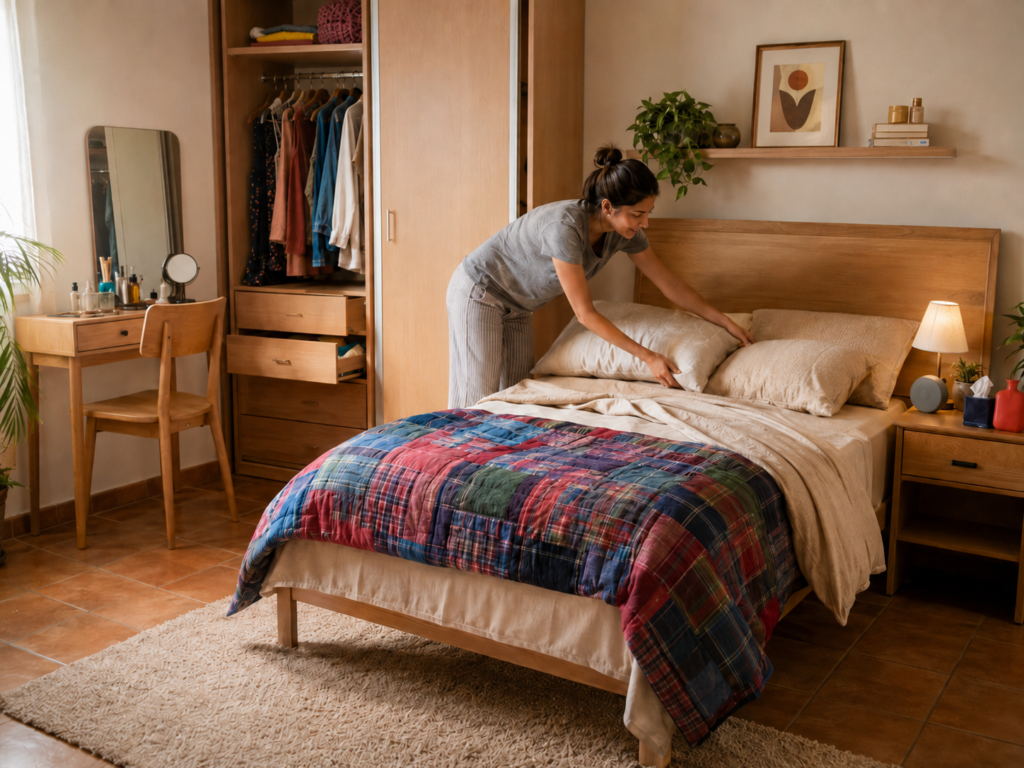

Brazilian Portuguese bedroom vocabulary is essential for anyone learning how to describe a home, talk about furniture, shop for bedding, or explain a daily routine in Portuguese. In Brazil, some words are different from European Portuguese, so learning the Brazilian version helps you sound more natural in real conversations.
Why Learn Bedroom Vocabulary in Brazilian Portuguese?
The bedroom is one of the most common rooms people talk about in daily life. Therefore, knowing the right words helps you describe your space, book accommodation, buy furniture, and understand conversations about the home.
Also, many Portuguese books use European Portuguese words. However, in Brazil, people often use different terms for the same objects. For example, o guarda-fatos is common in Portugal, but Brazilians usually say o guarda-roupa.
Main Bedroom Furniture in Brazilian Portuguese
Furniture vocabulary is a great place to start because these words appear often in home conversations. In Brazilian Portuguese, you can use these terms to describe the main objects in a bedroom.
Bed and Sleeping Area
A cama means bed. It is one of the most important words in any bedroom vocabulary list.
O colchão means mattress. You use this word when talking about comfort, size, or buying a new bed.
A cabeceira means headboard. Although not every bed has one, this word is useful when describing bedroom furniture.
O pé da cama means footboard or the end part of the bed. In Brazil, people may also simply say a parte de baixo da cama in casual speech.
Types of Beds
A cama de casal means double bed or full bed, depending on the context. In Brazil, this is the standard expression for a bed made for two people.
A cama de solteiro means single bed or twin bed. This word is useful when talking about guest rooms, children’s rooms, or hotels.
Brazilian Portuguese Bedding Vocabulary
Bedding words are very practical because they appear in conversations about cleaning, sleeping, hotels, and comfort. Moreover, these terms help you understand product labels when shopping in Brazil.
Basic Bed Linen Words
A roupa de cama means bed linen. This expression refers to the general set of items used on a bed.
O lençol means sheet. In Brazil, people may say lençol de cima for a top sheet and lençol de baixo for a bottom sheet.
A fronha means pillowcase. This word is very common when talking about changing or washing bed linen.
O travesseiro means pillow. In Brazilian Portuguese, travesseiro is the best word for the pillow used for sleeping. The word almofada usually means a decorative cushion.
Blankets, Quilts, and Comforters
O edredom means comforter or duvet. In European Portuguese, you may see edredão, but in Brazil the natural word is edredom.
O cobertor means blanket. It is common in colder weather or when the bedroom has air conditioning.
A colcha means bedspread or quilt. People often use it to decorate the bed during the day.
A coberta can also mean blanket or cover, depending on the region. However, cobertor and colcha are more specific.
Bedroom Storage Vocabulary in Brazilian Portuguese
Storage vocabulary helps you describe where clothes, documents, and personal items are kept. Because Brazilian homes vary in size, these words appear in many everyday conversations.
Closets and Wardrobes
O guarda-roupa means wardrobe or closet. This is the Brazilian Portuguese version of the European Portuguese word guarda-fatos.
O armário embutido means built-in closet. You can also hear guarda-roupa embutido, especially when people describe bedroom design.
A cômoda means chest of drawers or dresser. This piece of furniture usually stores clothes, accessories, or small personal items.
A gaveta means drawer. This word works for furniture in the bedroom, kitchen, office, or bathroom.
Hangers and Organization
O cabide means hanger. It is useful when talking about organizing clothes inside a closet.
Arrumar o guarda-roupa means to organize the wardrobe. This phrase sounds natural in Brazil.
Bedroom Objects in Brazilian Portuguese
Some small bedroom objects are easy to forget, but they make your Portuguese more complete. Besides that, they help you describe a bedroom in detail.
Nightstand and Lighting
O criado-mudo means nightstand. Some people also say mesa de cabeceira, but criado-mudo is very common in Brazil.
O abajur means lamp, especially a small lamp used beside the bed. In Portugal, you may see candeeiro, but Brazilians usually say abajur or luminária.
A luminária de cabeceira means bedside lamp. This expression is clear and useful in more descriptive contexts.
Clocks and Bedside Items
O despertador means alarm clock. It can be a physical clock or the alarm on a phone.
O rádio-relógio means clock radio. Although it is less common today, the word still appears in vocabulary books and older homes.
A caixa de lenços de papel means box of tissues. In Brazil, people may also say caixa de lenços in everyday speech.
A bolsa de água quente means hot-water bottle. This is more natural in Brazilian Portuguese than saco de água quente.
Dressing Table, Mirror, Floor, and Carpet
These words help you describe the rest of the bedroom. Additionally, they are useful when talking about decoration and furniture layout.
O espelho means mirror. This word is common in bedrooms, bathrooms, and closets.
A penteadeira means dressing table. The word toucador exists, but penteadeira sounds more natural in Brazilian Portuguese.
O chão means floor. You can also say o piso, especially when talking about the material, such as wood, tile, or carpet.
O carpete means carpet. In Portugal, people often use alcatifa, but in Brazil carpete is more common.
O tapete means rug. A rug usually covers only part of the floor.
Useful Bedroom Verbs in Brazilian Portuguese
Vocabulary becomes more useful when you learn it with actions. Therefore, these verbs will help you talk about your daily bedroom routine.
Sleeping and Waking Up
Dormir means to sleep.
Example: Eu vou dormir agora.
Meaning: I am going to sleep now.
Ir dormir means to go to sleep.
Example: Eu preciso ir dormir cedo.
Meaning: I need to go to sleep early.
Acordar means to wake up.
Example: Eu acordo às sete.
Meaning: I wake up at seven.
Levantar or se levantar means to get up.
Example: Eu me levanto cedo durante a semana.
Meaning: I get up early during the week.
Bedroom Routine Verbs
Deitar or se deitar means to lie down or to go to bed.
Example: Ela se deita depois do jantar.
Meaning: She goes to bed after dinner.
Arrumar a cama means to make the bed.
Example: Eu arrumo a cama de manhã.
Meaning: I make the bed in the morning.
Fazer a cama also means to make the bed. However, arrumar a cama sounds very natural in Brazil.
Colocar o despertador means to set the alarm.
Example: Eu coloco o despertador antes de dormir.
Meaning: I set the alarm before going to sleep.
Roncar means to snore. In European Portuguese, you may see ressonar, but Brazilians usually say roncar.
European Portuguese vs Brazilian Portuguese Bedroom Words
Some words in the pictures are more common in Portugal than in Brazil. Because your article focuses on Brazilian Portuguese, use these Brazilian versions.
| European Portuguese | Brazilian Portuguese | English |
|---|---|---|
| o guarda-fatos | o guarda-roupa | wardrobe / closet |
| o candeeiro | o abajur / a luminária | lamp |
| a mesa de cabeceira | o criado-mudo / a mesa de cabeceira | nightstand |
| o edredão | o edredom | comforter / duvet |
| a almofada | o travesseiro | pillow |
| a alcatifa | o carpete | carpet |
| o roupeiro embutido | o armário embutido | built-in closet |
| o saco de água quente | a bolsa de água quente | hot-water bottle |
| o toucador | a penteadeira | dressing table |
| ressonar | roncar | to snore |
Example: Describing a Bedroom in Brazilian Portuguese
Here is a natural example using Brazilian Portuguese bedroom vocabulary:
Meu quarto tem uma cama de casal, um guarda-roupa grande e um criado-mudo ao lado da cama. Em cima do criado-mudo, eu deixo um abajur e o despertador. A cama tem um colchão confortável, dois travesseiros, lençol, fronha e um edredom. No chão, há um tapete pequeno perto da penteadeira.
Translation:
My bedroom has a double bed, a large wardrobe, and a nightstand beside the bed. On the nightstand, I keep a lamp and the alarm clock. The bed has a comfortable mattress, two pillows, a sheet, a pillowcase, and a comforter. On the floor, there is a small rug near the dressing table.
Quick Brazilian Portuguese Bedroom Vocabulary List
Use this list to review the most important words.
| Portuguese | English |
|---|---|
| o quarto | bedroom |
| a cama | bed |
| o colchão | mattress |
| o travesseiro | pillow |
| a fronha | pillowcase |
| o lençol | sheet |
| o edredom | comforter / duvet |
| o cobertor | blanket |
| a colcha | bedspread / quilt |
| o guarda-roupa | wardrobe / closet |
| o armário embutido | built-in closet |
| a cômoda | chest of drawers |
| a gaveta | drawer |
| o criado-mudo | nightstand |
| o abajur | lamp |
| o despertador | alarm clock |
| o espelho | mirror |
| a penteadeira | dressing table |
| o chão | floor |
| o tapete | rug |
| o carpete | carpet |
| o cabide | hanger |
| a bolsa de água quente | hot-water bottle |
| a caixa de lenços | box of tissues |
Conclusion
Learning Brazilian Portuguese bedroom vocabulary makes everyday communication easier and more natural. Instead of memorizing only isolated words, connect each term to a real bedroom, a daily routine, or a simple sentence. As a result, words like cama, travesseiro, guarda-roupa, criado-mudo, and edredom become easier to remember and use in real conversations.