
Introduction
Learning Brazilian Portuguese vocabulary for hair and beauty is very useful if you want to describe your appearance, visit a salon in Brazil, or talk about hairstyles with native speakers. Many words used in Portugal are different from the words Brazilians use in daily life, especially in beauty and salon contexts.
In this guide, you will learn the most natural Brazilian Portuguese words for hair, hair products, hairstyles, hair colors, and salon services.
Basic Hair Vocabulary in Brazilian Portuguese
Hair and People at the Salon
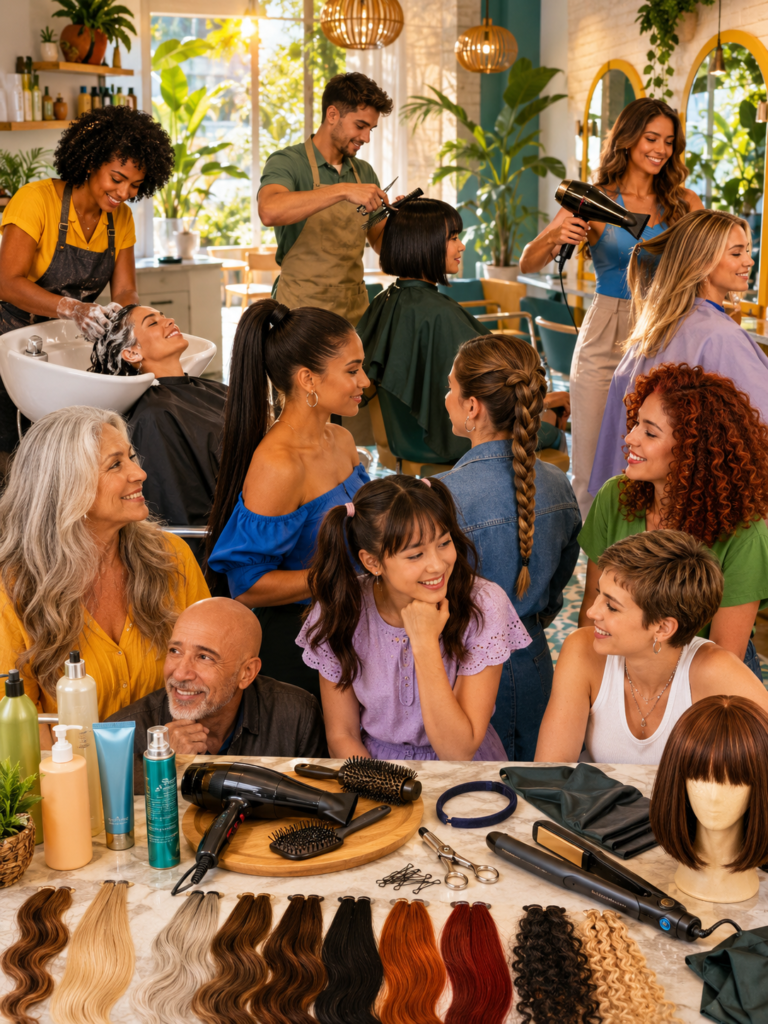
In Brazilian Portuguese, hair is o cabelo. A hairdresser is o cabeleireiro for a man and a cabeleireira for a woman.
Here are useful words:
| English | Brazilian Portuguese |
|---|---|
| hair | o cabelo |
| hairdresser | o cabeleireiro / a cabeleireira |
| barber | o barbeiro |
| client | o cliente / a cliente |
| sink | a pia / o lavatório |
| scalp | o couro cabeludo |
| beard | a barba |
| mustache | o bigode |
| dandruff | a caspa |
In a salon, Brazilians may say o lavatório when talking about the place where the hairdresser washes your hair, but a pia is also understood.
Hair Actions in Brazilian Portuguese
Common Verbs for Hair Care
These verbs are essential if you want to explain what you want at the salon:
| English | Brazilian Portuguese |
|---|---|
| to wash | lavar |
| to rinse | enxaguar |
| to comb | pentear |
| to brush | escovar |
| to cut | cortar |
| to trim | aparar |
| to straighten | alisar |
| to blow-dry | secar com o secador |
| to style hair | arrumar o cabelo / fazer um penteado |
A very common phrase in Brazil is:
Quero cortar só as pontas.
I want to cut only the ends.
Another useful sentence:
Você pode lavar e secar meu cabelo?
Can you wash and blow-dry my hair?
Hair Salon Tools and Products in Brazilian Portuguese
Hair Products
Some words from European Portuguese are not the most natural in Brazil. For example, champô is used in Portugal, but in Brazil people usually say xampu or shampoo.
| English | Natural Brazilian Portuguese |
|---|---|
| shampoo | o xampu / o shampoo |
| conditioner | o condicionador |
| gel | o gel |
| hairspray | o laquê / o spray fixador |
| hair elastic | o elástico de cabelo |
In Brazil, condicionador is much more common than amaciador.
Hair Tools and Accessories
| English | Natural Brazilian Portuguese |
|---|---|
| comb | o pente |
| brush | a escova |
| blow-dryer | o secador de cabelo |
| scissors | a tesoura |
| curling iron | o babyliss / o modelador de cachos |
| hair straightener | a chapinha |
| headband | a tiara / a faixa de cabelo |
| bobby pins | os grampos de cabelo |
| salon cape | a capa de corte |
In Brazil, chapinha is the everyday word for a hair straightener. Alisador de cabelo is understood, but it sounds more formal.
Hairstyles in Brazilian Portuguese
Common Hairstyles
Here are the most useful hairstyle words in Brazilian Portuguese:
| English | Brazilian Portuguese |
|---|---|
| ponytail | o rabo de cavalo |
| braid | a trança |
| bun | o coque |
| French twist | o coque banana |
| pigtails | maria-chiquinha / marias-chiquinhas |
| bob haircut | o corte chanel / o corte bob |
| short haircut | o corte curto |
| wig | a peruca |
| highlights | as luzes / as mechas |
| perm | a permanente |
In Brazilian Portuguese, o coque is the natural word for “bun.” The word puxo, used in some Portuguese materials, is not common in Brazil.
For “highlights,” Brazilians usually say luzes or mechas, not madeixas.
Hair Types and Hair Conditions
Describing Hair Texture
| English | Brazilian Portuguese |
|---|---|
| straight | liso |
| curly | cacheado |
| dry | seco |
| oily / greasy | oleoso |
| normal | normal |
| bald | careca |
Although encaracolado is correct, Brazilians usually say cacheado for curly hair.
Examples:
Meu cabelo é cacheado.
My hair is curly.
Meu cabelo é oleoso.
My hair is oily.
Meu cabelo está seco.
My hair is dry.
Hair Problems
| English | Brazilian Portuguese |
|---|---|
| split ends | pontas duplas |
| dandruff | caspa |
| oily scalp | couro cabeludo oleoso |
| dry hair | cabelo seco |
In Brazil, pontas duplas is more natural than pontas espigadas.
Hair Colors in Brazilian Portuguese
Natural and Dyed Hair Colors
| English | Brazilian Portuguese |
|---|---|
| blond / blonde | loiro / loira |
| brown / brunette | castanho |
| auburn / copper | acobreado / cobre |
| red-haired | ruivo / ruiva |
| black | preto |
| gray | grisalho |
| white | branco |
| dyed | tingido |
In Brazil, loiro/loira is more common than louro/loura.
Examples:
Ela tem cabelo loiro.
She has blond hair.
Ele tem cabelo castanho.
He has brown hair.
Meu cabelo é tingido.
My hair is dyed.
Useful Brazilian Portuguese Phrases for the Hair Salon
Phrases to Ask for a Haircut
Quero cortar o cabelo.
I want to cut my hair.
Quero aparar as pontas.
I want to trim the ends.
Quero um corte curto.
I want a short haircut.
Quero manter o comprimento.
I want to keep the length.
Não quero cortar muito.
I don’t want to cut too much.
Phrases for Styling
Quero fazer uma escova.
I want a blowout.
Você pode alisar meu cabelo?
Can you straighten my hair?
Quero fazer cachos.
I want to curl my hair.
Quero prender o cabelo em um coque.
I want to put my hair in a bun.
Quero fazer uma trança.
I want to get a braid.
Phrases for Color
Quero pintar o cabelo.
I want to dye my hair.
Quero fazer luzes.
I want to get highlights.
Quero deixar meu cabelo mais claro.
I want to make my hair lighter.
Quero deixar meu cabelo mais escuro.
I want to make my hair darker.
Portugal vs. Brazil: Hair Vocabulary Differences
Some Portuguese textbooks use vocabulary that sounds more European. Here are better Brazilian Portuguese alternatives:
| European Portuguese / Formal Word | Brazilian Portuguese |
|---|---|
| champô | xampu / shampoo |
| amaciador | condicionador |
| laca | laquê / spray fixador |
| bandolete | tiara / faixa de cabelo |
| gancho | grampo de cabelo |
| puxo | coque |
| totós | maria-chiquinha |
| madeixas | luzes / mechas |
| cabeleira postiça | peruca |
| encaracolado | cacheado |
| pontas espigadas | pontas duplas |
| louro / loura | loiro / loira |
| ferro de frisar | babyliss / modelador de cachos |
These Brazilian Portuguese words will sound more natural in everyday conversation.
Conclusion
Learning Brazilian Portuguese hair vocabulary helps you describe your appearance, understand beauty content, and communicate clearly at a hair salon in Brazil. Focus on natural Brazilian words like cabelo, chapinha, xampu, condicionador, coque, luzes, mechas, cacheado, and pontas duplas.
These words are practical, common, and useful for real conversations with Brazilian Portuguese speakers.